
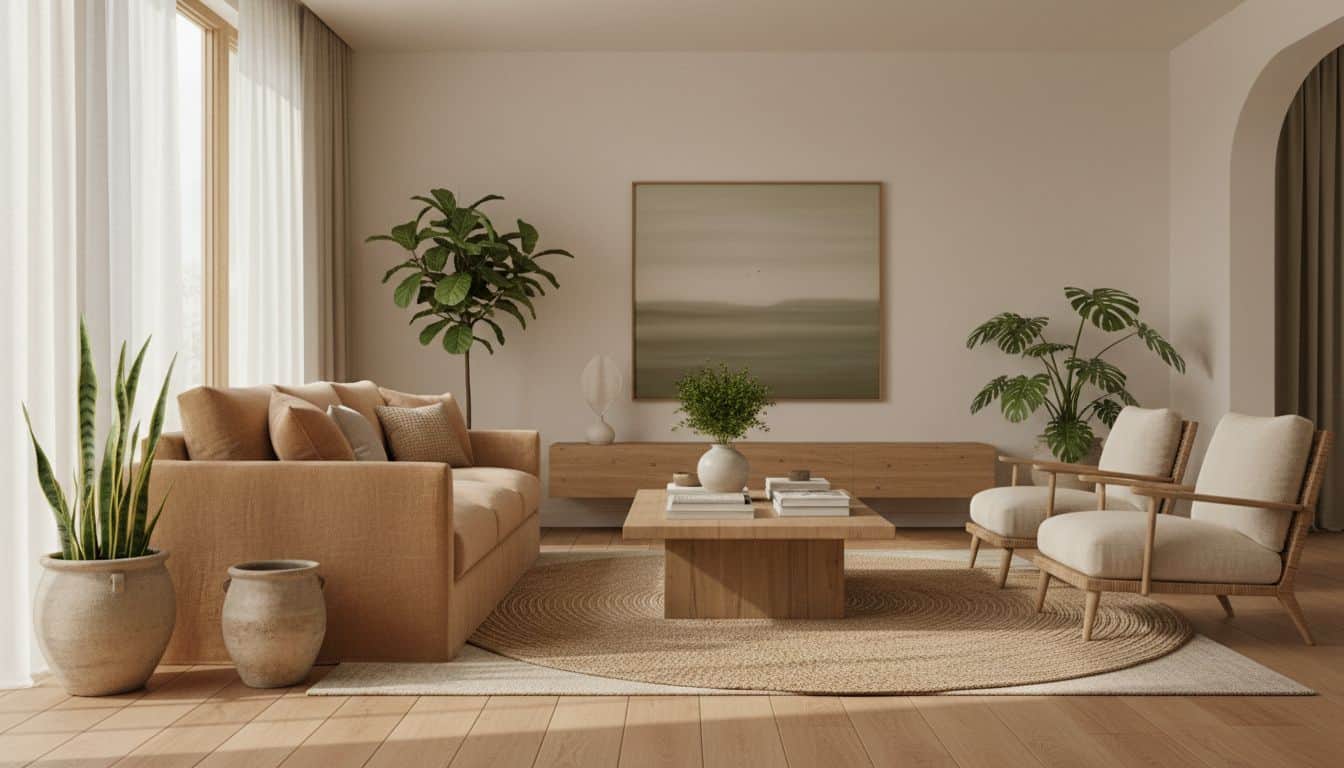
AI disclosure: this content, including any imagery, was artificially generated.
Feng shui room design is the practice of arranging a room so that energy — chi — flows freely, leaving the space calm, balanced, and easy to live in. You don’t need to believe in anything mystical for it to work. Most feng shui rules are really good spatial-design instincts dressed in older language: put the bed where you feel safe, keep walkways clear, let light in, and stop clutter from piling up in the corners.
This guide gives you ten concrete rules you can apply to any room today, plus a quick-reference table and answers to the questions people ask most. Follow them in order and almost any room will feel more settled by the end of an afternoon.
Key Takeaways
- The commanding position — bed, desk, or sofa facing the door without being in line with it — is the single highest-impact move in feng shui room design.
- Clear flow matters more than any decoration: keep the path from the door into the room open.
- Use the bagua map to decide what each area of the room should support, and the five elements to balance its feel.
- Light, plants, and a grounded color palette do most of the emotional work; clutter undoes all of it.
1. Start With the Commanding Position
The commanding position is the foundation of feng shui room design. Place the most important piece of furniture — the bed in a bedroom, the desk in an office, the main sofa in a living room — so that you can see the door while you’re using it, but you’re not sitting directly in line with it. Diagonally opposite the door is ideal. Most people simply find it more comfortable to sit facing the room, which is why the rule survives whatever you make of the rest. If the layout won’t allow a clear sightline, a well-placed mirror that reflects the doorway restores it.
2. Clear the Path for Chi (Energy Flow)
In feng shui, chi is described as the flow of energy — and attention — through a space, and it should be able to move from the doorway into the room without weaving around obstacles. Walk in from the entrance: if you have to sidestep a chair, an open door, or a stack of boxes, so does the eye. Keep the first few feet inside any doorway completely clear, round off tight furniture corners that jut into walkways, and make sure interior doors open fully. A room where you can move in a smooth curve feels alive; one full of dead-ends feels heavy.
3. Map Your Room With the Bagua
The bagua is a nine-square grid that maps different life areas — wealth, relationships, career, health — onto the physical space of a room. Stand in the doorway and mentally lay the grid over the floor: the far-left corner governs wealth, the far-right relationships, the center health, and the near edge career and knowledge. You don’t have to treat every zone, but it’s a useful lens: put something you value in the wealth corner, pair objects in the relationship corner, and keep the center open and grounded. In feng shui room design the bagua turns “where does this go?” into a decision with logic behind it.
4. Balance the Five Elements
Feng shui recognizes five elements — wood, fire, earth, metal, and water — and a balanced room carries a touch of each. Wood shows up as plants and natural furniture, fire as candles and warm light or red tones, earth as ceramics and sandy colors, metal as frames and hardware, water as mirrors, glass, and flowing shapes. Most rooms lean heavily on one or two and ignore the rest. Add what’s missing in small doses: a single plant, a warm lamp, a stone bowl, a metal frame, a glass vase. The point is variety, not a checklist.
5. Let in Natural Light and Air
Feng shui holds that good chi needs light and fresh air to move. Pull heavy window coverings back during the day, clean the glass so light isn’t muted, and open a window regularly even in winter to let stale air out. Where natural light is scarce, layer in warm artificial light at several heights — a ceiling source, a table lamp, a floor lamp — rather than relying on one harsh overhead fixture. A bright, breathing room resets the whole space; a dim, sealed one deadens it.
6. Choose a Calming, Grounded Color Palette
Color is the fastest way to change how a room feels. In feng shui, grounded earth tones — soft clay, sand, warm greige, muted sage — create stability and are hard to get wrong. Use them as your base across walls and large furniture, then bring in accent colors tied to the element or life-area you want to support: greens and blues for growth and calm, gentle reds and terracottas for warmth and connection. Avoid filling a restful room with high-energy, high-contrast color; save the boldest tones for the spaces where you want activity, like an entry or a workout corner.
7. Cut the Clutter — Especially Under the Bed
Feng shui treats clutter as stuck energy, and no amount of good layout survives it. Clear surfaces, keep floors open, and be ruthless about the spots that collect mess invisibly: the backs of doors, the tops of wardrobes, and the space under the bed. In a bedroom, feng shui is emphatic about keeping under-bed storage minimal — and never storing anything stressful (work files, exercise gear, old paperwork) where you sleep. If you must use that space, keep it to soft, sleep-related items like spare bedding.
8. Bring in Living Plants — Carefully
Living plants introduce the wood element, soften hard surfaces, and add gentle movement, all of which lift how a room reads. Choose species with soft, rounded leaves — pothos, peace lily, rubber plant — over spiky, aggressive shapes, which are said to create “poison arrows” of harsh energy. Keep plants healthy; a dying plant does the opposite of what you want, so remove anything struggling. One or two thriving plants per room is plenty. In bedrooms, keep them modest and out of the direct line of the bed.
9. Fix the Mirrors
Mirrors are powerful in feng shui room design because they double whatever they reflect, and the tradition treats them as redirecting energy. Use that on purpose. Position a mirror to reflect a window, a view, or the doorway to expand light and restore a commanding sightline. Avoid the common mistakes: don’t hang a mirror directly facing the bed (it’s said to disturb sleep), don’t let one reflect clutter or a cramped corner, and don’t hang mirrors so low or high that they cut off your reflection. A single well-placed mirror can transform a dark or tight room.
10. Adapt the Rules Room by Room
The principles stay the same, but emphasis shifts by room. In a feng shui bedroom, prioritize the commanding bed position, a solid headboard against a wall, and low, restful lighting. In a feng shui living room, arrange seating so people face each other in a loose circle with everyone’s back supported, and keep the coffee table with rounded edges. In a home office, put the desk in command, keep the wall behind you solid, and face into the room. Treat each space for how it’s actually used, and the design follows naturally.
Feng Shui Room Design Quick Reference
| Room | Put in the command spot | Best colors & elements | Avoid |
|---|---|---|---|
| Bedroom | Bed — solid headboard, sightline to door | Earth tones, soft textiles, wood | Mirror facing bed, clutter under bed |
| Living room | Main sofa — back to a wall | Warm neutrals, a touch of fire & wood | Sofa floating with its back to the door |
| Home office | Desk — facing the room, solid wall behind | Metal accents, grounded base, good light | Desk facing a wall or with door behind you |
| Entryway | Clear, bright, welcoming path | Light, a mirror (not facing the door) | Shoes, bags, and clutter blocking flow |
Frequently Asked Questions
What is the most important rule in feng shui room design?
The commanding position. Placing your bed, desk, or main sofa so you can see the door without being directly in line with it does more for how a room feels than any decorative choice, because most people find it more comfortable to sit facing the room.
Can I do feng shui in a small room?
Yes — small rooms often respond best. Keep the walkway from the door clear, use a mirror to reflect light and expand the space, cut clutter aggressively, and pick one or two grounding colors rather than many. Good flow matters more than square footage.
What colors are best for a feng shui bedroom?
Soft, grounded earth tones — clay, sand, warm greige, and muted greens — support rest and stability. Add small accents of gentle blue for calm or soft terracotta for warmth. Avoid bright, high-contrast, energizing colors in a space meant for sleep.
Where should the bed go in feng shui?
Against a solid wall, with a sturdy headboard, positioned so you can see the bedroom door from the bed but the bed is not directly in line with the doorway. Diagonally opposite the door is the classic commanding position.
Do I have to follow every feng shui rule?
No. Feng shui room design is a set of guidelines, not commandments. Start with the commanding position and clear chi flow — the two highest-impact rules — then add the elements, colors, and adjustments that fit your space and how you live in it.
Bring It Together
Feng shui room design comes down to a simple loop: position the key furniture in command, keep the path through the room open, balance the elements, and never let clutter creep back in. Apply the ten rules above and any room — bedroom, living room, or office — will feel calmer and work better. Want to see it before you move a single piece of furniture? Use the free RoomZen Room Recipe tool to test layouts, colors, and arrangements on your actual space in minutes.