
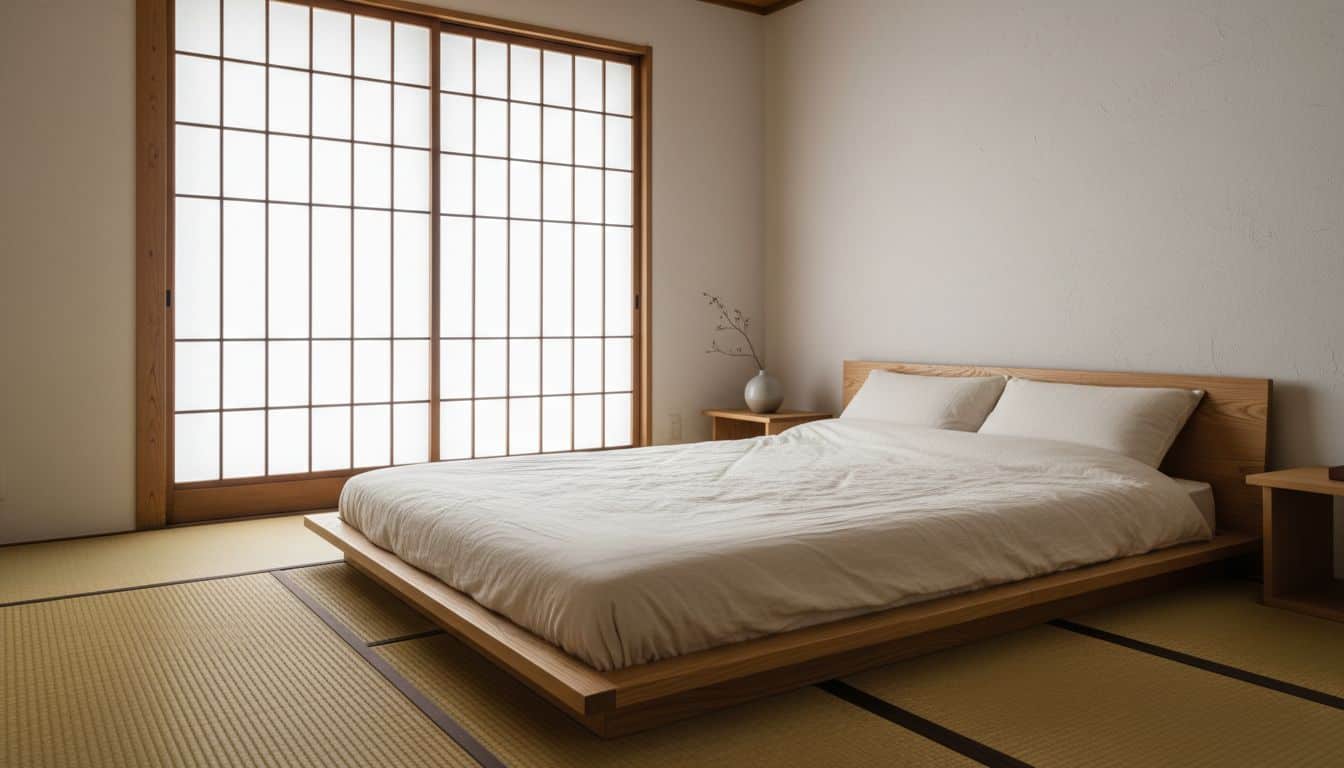
AI disclosure: this content, including any imagery, was artificially generated.
Japanese bedroom design brings together minimalism, natural materials, and a deep sense of calm to create a space that feels balanced and restful. Rooted in principles like wabi-sabi (beauty in simplicity and imperfection) and a strong connection to nature, it’s less a decorating style than a philosophy: keep only what matters, choose natural over synthetic, and let the room breathe.
Here are ten ideas to bring serene Japanese-inspired design to your bedroom, plus a quick-reference table and answers to common questions.
Key Takeaways
- Minimalism and clear space are the heart of Japanese bedroom design — keep only the essentials.
- Natural materials (wood, bamboo, linen, paper) and a neutral, earthy palette create warmth and calm.
- Low furniture and soft, diffused light reinforce the grounded, serene feel.
- Bring nature in, and let simplicity — not decoration — carry the room.
1. Embrace Minimalism
Japanese bedroom design is built on simplicity. Keep only what you need and love, clear surfaces, and resist filling the room. This restraint is the foundation of the whole aesthetic — the calm comes from open, uncluttered space. Everything in the room should have a purpose and a place; the rest goes.
2. Choose a Low Platform Bed
Low furniture is central to the look. A low platform bed — or a futon on a tatami-style base — sits close to the floor, reinforcing the grounded, serene feel and making the ceiling seem higher. Keep the frame simple and wooden, and dress it in clean, natural bedding.
3. Use Natural Materials Throughout
Wood, bamboo, paper, linen, cotton, and stone are the materials of a Japanese bedroom. Light woods, woven textures, and natural fibers add warmth and an organic connection to nature. Keep finishes matte and tactile. Natural materials are what give the minimalism its warmth rather than coldness.
4. Keep the Palette Neutral and Earthy
Stick to a calm, nature-inspired palette: warm white, beige, soft browns, muted greens, and charcoal. These earthy neutrals are restful and let the natural materials and textures take center stage. Avoid bright or high-contrast color, which disrupts the serene, balanced mood.
5. Soften and Diffuse the Light
Lighting should be soft and diffused, never harsh. Shoji-style paper screens, rice-paper lanterns, and warm low lamps scatter light gently and create a calm glow. Filter natural daylight with light linen or paper shades. Soft, even light is essential to the tranquil atmosphere.
6. Bring Nature Indoors
A strong connection to nature defines Japanese design. Add a bonsai, a bamboo plant, a simple branch arrangement, or a few carefully chosen greens. One or two natural elements bring life and reinforce the room’s grounding in the natural world — always in keeping with the minimalist spirit.
7. Add Shoji-Inspired Screens or Dividers
Shoji screens — light wooden frames with translucent panels — are iconic to Japanese interiors. Use one as a room divider, a window treatment, or a headboard-style feature. They filter light beautifully, add authentic character, and create gentle separation without closing off the space.
8. Prioritize Clean, Open Floor Space
Open floor space is valued as much as the furniture. Keep the floor as clear as possible, choose low pieces, and let the room feel airy and grounded. A tatami mat or a simple natural-fiber rug can define the space while keeping it minimal. Negative space is part of the design, not a gap to fill.
9. Practice Wabi-Sabi
Wabi-sabi finds beauty in simplicity, natural imperfection, and age. Choose handmade ceramics, natural-grain wood, and pieces with character and patina over flawless, mass-produced items. This appreciation for the imperfect and authentic gives a Japanese bedroom its quiet, soulful warmth.
10. Decorate With Intention
Every object should earn its place. Decorate sparingly and meaningfully — a single piece of calming art, a handmade vessel, an ikebana arrangement. In Japanese bedroom design, restraint is the point: a few carefully chosen, beautiful things usually create more serenity than many.
Japanese Bedroom Quick Reference
| Element | Japanese-inspired choice | Avoid |
|---|---|---|
| Furniture | Low, simple, wooden | Tall, bulky, ornate pieces |
| Materials | Wood, bamboo, paper, linen | Glossy plastics and synthetics |
| Color | Warm neutrals, earthy tones | Bright, high-contrast color |
| Lighting | Soft, diffused, warm | Harsh overhead light |
| Space | Open, clear floors | Clutter and crowded surfaces |
Frequently Asked Questions
What defines Japanese bedroom design?
Minimalism, natural materials, a neutral earthy palette, low furniture, soft diffused lighting, and a strong connection to nature. It’s guided by principles like wabi-sabi — finding beauty in simplicity and imperfection — and prioritizes calm, open, clutter-free space.
What is a Japanese-style bed?
Typically a low platform bed or a futon on a tatami base, sitting close to the floor with a simple wooden frame. The low profile reinforces the grounded, serene feel central to Japanese design and makes the room feel more open.
What colors are used in Japanese bedroom design?
Warm, nature-inspired neutrals: white, beige, soft brown, muted green, and charcoal. These earthy tones are calming and let natural materials and textures stand out. Bright or high-contrast colors are avoided to preserve the serene mood.
How do I create a Japanese bedroom in a small space?
Small rooms suit the style well. Embrace minimalism, use a low bed, keep the floor clear, choose natural materials and a neutral palette, and diffuse the light with paper shades. The clutter-free, low-profile approach makes a small room feel calm and more spacious.
Bring It Together
Japanese bedroom design is serenity through simplicity: minimalism, natural materials, earthy neutrals, low furniture, and soft light, all grounded in a connection to nature. Strip back to the essentials and choose natural, meaningful pieces. Want to plan a calmer, low-profile layout first? Use the free RoomZen Room Recipe tool to test a Japanese-inspired scheme on your own bedroom.