
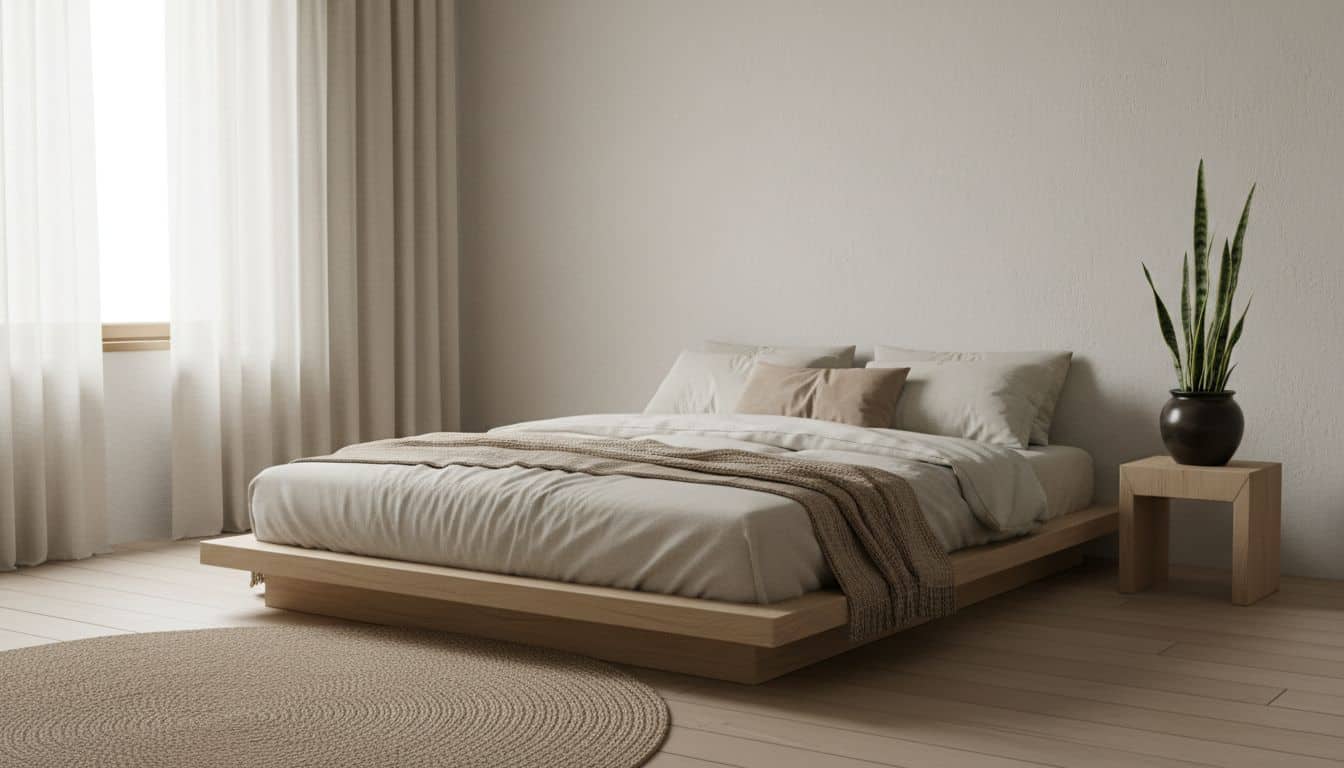
AI disclosure: this content, including any imagery, was artificially generated.
Zen bedroom design is the art of creating a calm, uncluttered space that helps your mind and body wind down. Rooted in Japanese principles of simplicity and balance, a zen bedroom strips away the excess and keeps only what brings rest and function. The result is a room that feels like a deep exhale — quiet, natural, and effortless to relax in.
Here are ten ways to bring genuine calm to your bedroom, plus a quick-reference table and answers to the questions people ask most.
Key Takeaways
- A neutral, natural palette and natural materials (wood, linen, stone) are the foundation of zen bedroom design.
- Clear surfaces and minimal clutter matter more than any single decorative choice — calm comes from what you remove.
- Low, warm lighting and a few plants make the room feel restful and alive.
- Keep the bed the clear centerpiece and let everything else stay quiet.
1. Choose a Soft, Neutral Palette
Zen bedroom design begins with a calm, neutral palette: warm white, soft beige, greige, muted taupe, and gentle earth tones. These low-contrast colors soothe the eye and make the room feel serene and spacious. Avoid bold, high-contrast, or highly saturated colors, which stimulate rather than settle. Keep the whole scheme within a narrow, quiet range.
2. Declutter Ruthlessly
Nothing undoes calm faster than clutter. A zen bedroom keeps surfaces clear, floors open, and only the essentials on display. Give everything a home behind closed storage, and be honest about what actually needs to be in the room. Decluttering is the single most powerful move in zen design — the calm comes from what you remove, not what you add.
3. Use Natural Materials
Bring in wood, linen, cotton, wool, bamboo, and stone. Natural materials add warmth, texture, and a grounding connection to nature that synthetic finishes can’t. A wooden bed frame, linen bedding, and a stone or ceramic accent instantly make a room feel more organic and calm. Keep finishes matte and tactile rather than glossy.
4. Keep the Bed the Centerpiece
In a zen bedroom the bed is the clear focus, dressed simply in natural, breathable bedding in soft neutral tones. A low platform bed reinforces the grounded, minimalist feel. Skip the pile of decorative pillows — a few quality layers look calmer and are far more practical than a mountain you remove every night.
5. Lower and Warm the Lighting
Harsh overhead light is the enemy of rest. Layer soft, warm, dimmable lighting: a low ambient source, warm bedside lamps, and maybe a paper lantern or candle for gentle glow. Being able to dim the room in the evening sets a quieter tone and keeps the whole space feeling tranquil after dark.
6. Bring in a Few Plants
Greenery adds life, softens hard edges, and reinforces the connection to nature at the heart of zen design. Choose one or two calm, easy plants — a snake plant, peace lily, or a small bonsai — rather than a jungle. A single healthy plant does more for a restful room than a crowd of them.
7. Maximize Natural Light and Air
Let daylight in with sheer or light linen window treatments instead of heavy drapes, and open a window regularly for fresh air. Natural light and airflow keep a zen bedroom feeling clean, bright, and alive during the day. Where privacy allows, keep windows as unobstructed as possible.
8. Embrace Negative Space
Zen design values emptiness as much as objects. Leave walls and surfaces intentionally sparse and let the room breathe. Negative space gives the eye somewhere to rest and makes the pieces you do keep feel considered. Resist the urge to fill every corner — the calm lives in the openness.
9. Add Soft, Layered Texture
Calm doesn’t mean cold. Layer soft, natural textures — a chunky wool throw, a linen duvet, a woven rug underfoot — to make the room warm and inviting. Within a neutral palette, texture provides quiet interest and comfort without adding visual noise or color.
10. Keep Decor Simple and Meaningful
Decorate with intention: a single piece of calming art, a simple ceramic vessel, a small stack of books. Every object should earn its place and add to the sense of peace. In zen bedroom design, a few meaningful, well-chosen pieces usually beat a shelf full of accessories.
Zen Bedroom Quick Reference
| Element | Zen choice | Avoid |
|---|---|---|
| Color | Warm neutrals, soft earth tones | Bold, high-contrast, saturated color |
| Materials | Wood, linen, stone, bamboo | Glossy synthetics and plastic |
| Surfaces | Clear and minimal | Cluttered nightstands and shelves |
| Lighting | Low, warm, dimmable | Harsh white overhead light |
| Decor | A few meaningful pieces | Busy galleries and knick-knacks |
Frequently Asked Questions
What is a zen bedroom?
A zen bedroom is a calm, uncluttered space designed for rest, based on Japanese principles of simplicity and balance. It uses a neutral palette, natural materials, minimal clutter, low warm lighting, and plenty of negative space to create a peaceful, restful atmosphere.
What colors are best for a zen bedroom?
Soft, warm neutrals: white, beige, greige, taupe, and muted earth tones. Low-contrast, nature-inspired colors read as calm and restful. Avoid bold or highly saturated colors, which stimulate rather than soothe.
How do I make my bedroom feel calm and zen on a budget?
Start free: declutter ruthlessly, clear all surfaces, and rearrange for open space. Then add cheap high-impact touches — warm bedside lighting, linen or cotton bedding in neutral tones, one plant, and a soft rug. Calm comes mostly from removing, not buying.
How many plants should a zen bedroom have?
One or two is plenty. A single healthy, calming plant like a snake plant or peace lily reinforces the connection to nature without cluttering the room. Zen design favors restraint, so avoid turning the bedroom into a jungle.
Bring It Together
Zen bedroom design comes down to subtraction: a quiet neutral palette, natural materials, clear surfaces, warm low light, and space to breathe. Strip back to the essentials, keep the bed the calm centerpiece, and add only what brings peace. Want to plan a calmer layout before moving anything? Use the free RoomZen Room Recipe tool to test a zen scheme on your own bedroom first.